

There are many ways to grow a business. But not every new tool or idea is worth the cost. Custom software application development is one way to help your business grow. It lets you build tools that match how your team works.
Andrew Holder, founder of Revo Fitness, has spoken about the role of strong business systems in growing his gym network. At Biz365, we've seen how better systems can save businesses time and money. In some projects, automation has removed hours of manual work each week.
But is custom software right for your business? Here are five reasons why it could be a smart investment.
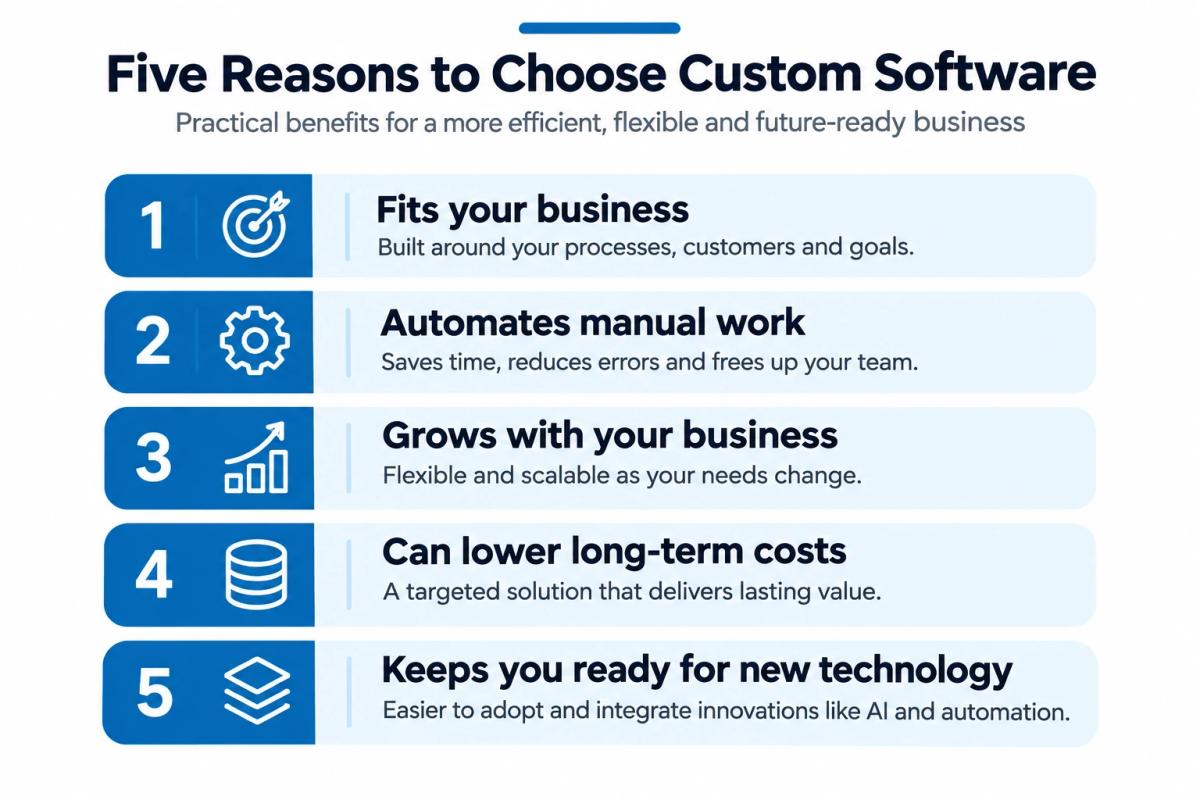
What Is Custom Software Application Development?
Custom software application development is the process of building software for a specific business need. Unlike ready-made software, custom applications are built around your team, your customers, and your goals. For example, a business might need software to:
- Automate daily tasks
- Connect different business systems
- Manage customer information
- Track orders and payments
- Create reports from business data
- Build a new product or service
Custom application development services help businesses plan, build, test, and maintain these tools. The goal is not to build software for the sake of it. It is to solve a real business problem.
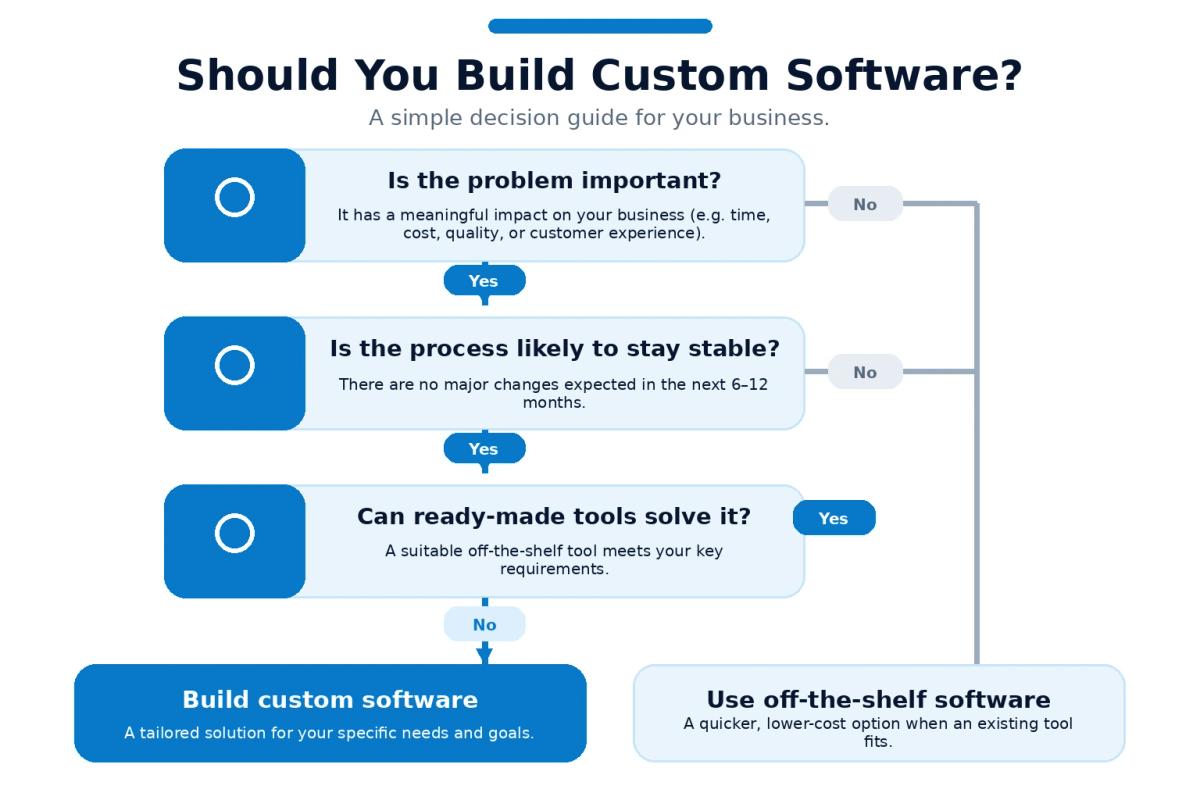
When should your business invest in custom software instead of using ready-made tools?
Why Custom Software Matters in Modern Business
Most businesses use the same popular software tools. These tools work well for many tasks. But they may not support the way your business works. Custom software lets you build features that other products do not offer.
It can also help you create your own intellectual property (IP). This means your business owns a tool or system that may give it an edge. When built well, custom software can make work faster, reduce mistakes, and help your business grow.
Reason 1: Software Built Around Your Business
Every business works a little differently. Ready-made software is designed for many companies. It may not fit your exact needs. Custom software is built to support the way you want to work. It gives you more control over your systems and how they help your business.
Custom Features for Your Business Needs
Think about a bakery. Every bakery makes cakes. But each bakery has its own recipes, methods, and customer experience. These differences help make the business special. Software works the same way. Two companies might sell the same product but manage orders in very different ways.
One might need a special quoting system. Another might need a tool to track stock across several stores. Custom software lets you build these features around your business. It can also make your systems harder for competitors to copy.
AI can help people write code. But copying a business process, its data, and the way its team works is much harder. The real value is not just the code. It is how the software supports your business.
Better User Experience for Customers and Staff
Good software should be easy to use. For customers, this might mean making it easier to place an order, book a service, or pay online. Think about a customer who visits your store to try a product but later buys it online.
Is your website easy to use? Can they find the product? Can they pay in a few simple steps? Custom software can help remove these problems. It can also make work easier for staff. Not every employee has the same computer skills.
Some people are happy using complex spreadsheets. Others need simple screens and clear steps. Software built for your team can reduce training time and make daily tasks easier.
Reason 2: More Efficient Business Processes
One of the biggest benefits of custom software is saving time. Many businesses spend hours moving data between systems, checking emails, and updating spreadsheets. These tasks are important, but they do not always need a person to complete them.
Custom software can do much of this work for you. That gives your team more time to focus on customers and growing the business.
Streamlined Business Processes
We once worked with a company that made windows. The business had a staff member who spent time reading emails and entering information into another system. The task was simple but took time every day.
We helped automate the process with custom software. Instead of having someone copy the information by hand, the system could process it automatically. This reduced manual work and freed up time for other tasks. The lesson is simple.
You may not be able to change what your business produces. But you can often change how fast and how well the work gets done.
Integration With Existing Business Systems
Most businesses use more than one software system. You might use one tool for sales, another for accounts, and another for customer support. The problem starts when these systems do not share information. Software integration services help connect these tools so data can move between them.
For example, a new customer order could:
- Update your sales system
- Create an invoice
- Notify your warehouse
- Update your stock levels
- Send the customer an email
This can all happen without staff entering the same data again. Custom software can connect tools such as Microsoft 365, Salesforce, HubSpot, and your own business systems. It can also support enterprise application development, where larger companies need several systems to work together.
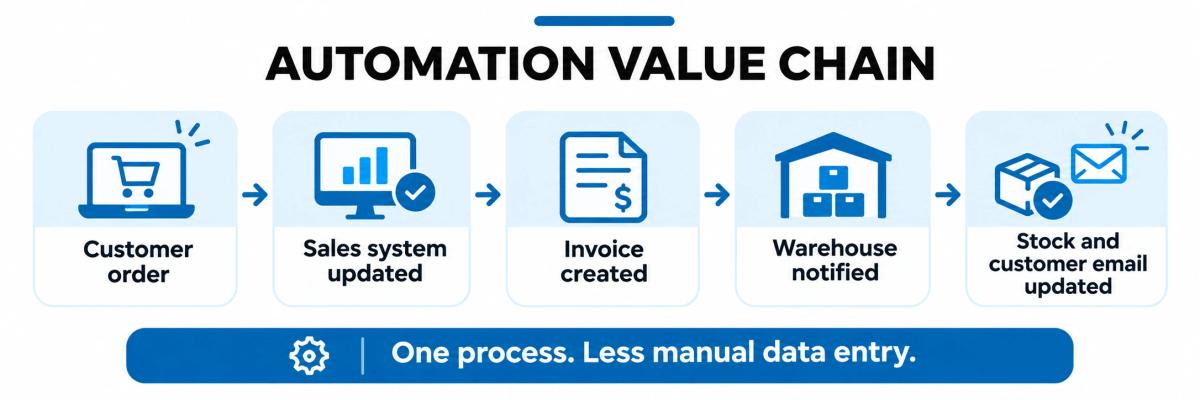
One customer order can trigger multiple business processes without repeated manual entry.
Reason 3: Software That Grows With Your Business
When you start a business, ready-made software is often the best choice. It is quick to set up and usually costs less at the start. But as your business grows, your needs can change. You may have more staff, more customers, and more data to manage.
A system that worked for five employees may struggle when you have 500. Custom software can be designed to support that growth.
Growing With Your Business Needs
McDonald's is a useful example of how strong systems help a business grow. Its success is not just about selling burgers. It also depends on clear processes that can be repeated across many locations. Growing businesses need the same kind of thinking.
When I started my own business journey, we used ready-made software for most tasks. That worked well at first. But as the business grew, we needed better reports from our different systems. The tools we used could not give us the full picture.
So we built our own data platform. It collected information from different systems and turned it into useful reports. This gave us a clearer view of the business and helped us make better decisions. Custom software can help your business do the same.
Flexible Software Architecture
Markets change. Customer needs change. Technology changes. Your software needs to keep up. With ready-made software, you often need to wait for the provider to add new features. With custom software, you have more control over what changes and when.
This is especially useful when adding AI tools or new ways to serve customers. A well-planned system can grow without needing to be rebuilt every time your business changes. This is why flexible software architecture matters.
It helps developers add features, connect new tools, and support more users over time.
Reason 4: Lower Costs Over Time
Custom software often costs more to build at the start. But it can save money over time. As your business grows, you may need to pay more for software licences, extra users, and new features.
Custom software has its own costs, such as hosting, updates, security, and support. The right choice depends on how your business works and how much you expect it to grow.
Custom Software vs Off-the-Shelf Solutions
We worked with a company that was looking at a learning management system (LMS). The business needed to support 400 users and one client. At the time, the quoted cost was $16,000. As the number of users grew to 1,000, the expected cost rose to $32,000.
That raised an important question. Would it be better to keep paying for more users or build a system that the business could control? Custom software can reduce some licence costs as you grow. But it also needs ongoing care.
The best way to compare the options is to look at the full cost over several years. This includes the cost to build, run, update, and support the software.
Avoiding Features You Don't Need
Many software products come with hundreds of features. But how many does your business actually use? Extra features can make software harder to learn and use. Staff may need more training. Simple tasks can become confusing.
Custom software lets you focus on the features your team needs. You can start with the most important tasks and add more features later. This helps keep the system simple and useful.
Reason 5: Keeping Up With New Technology
AI is changing how businesses work. It can help teams write content, review data, answer questions, and complete routine tasks. But using an AI tool is not the same as building AI into your business.
The real value comes when AI works with your data and business systems. Custom software can help make that happen.
Agile Software Development Practices
Agile software development is a way to build software in small steps. Instead of waiting months to finish a large project, teams build and test smaller features. They collect feedback and make changes as they go.
This helps businesses avoid spending too much time building something customers do not need. Agile shares ideas with lean manufacturing and Kaizen, the practice of ongoing improvement. Toyota is well known for using these ideas to improve its work.
The same thinking can help software teams. Build a small feature. Test it. Learn from the results. Then improve it. A clear software development lifecycle helps teams plan this work from the first idea through design, testing, release, and support.
Staying Ahead of Your Competition
Most businesses can buy the same software. Your competitors can use Microsoft 365, Salesforce, or HubSpot just like you. But they may not have the same custom tools, data, or business processes. That can give your business an edge.
For example, you might build a system that gives customers faster quotes or helps staff complete orders in half the time. Your competitors may be able to copy some features. But copying the full system, the data behind it, and the way it works with your business is much harder.
Custom software is not always the right choice. But when it solves an important problem, it can help your business stand out.
Other Custom Software Development Options
Not every business needs the same type of software. The right approach depends on your customers, budget, and goals.
Mobile Application Development
Mobile application development is useful when customers or staff need to use software on a phone or tablet. A mobile app might help customers book services, track orders, or manage their accounts. For staff, it could support work in warehouses, on building sites, or while travelling.
SaaS Application Development
SaaS stands for Software as a Service. SaaS application development is about building software that customers can use online, often through a paid subscription. This can be a good option for businesses that want to turn an idea into a software product.
Software Development Outsourcing
Software development outsourcing means hiring an outside team to build or support your software. This can give your business access to developers, designers, and testers without hiring a full internal team. A good partner should help you plan the project, explain the costs, and keep you involved in key decisions.
Frequently Asked Questions About Custom Software Development
What is custom software application development?
Custom software application development is the process of building software for a specific business need. It can help automate tasks, connect systems, manage data, and improve customer experiences. Unlike ready-made software, it is designed around how your business works.
What are the benefits of custom software development?
Custom software can improve efficiency, reduce manual work, connect business systems, and support growth. It also gives businesses more control over features and future changes. The value depends on the problem being solved and the cost of building and maintaining the software.
How much does custom software development cost?
The cost depends on the features, design, integrations, security needs, and project size. Simple tools may cost much less than large business platforms. A software development company can review your needs and provide an estimate for the build and ongoing support.
Is custom software better than off-the-shelf software?
Custom software is useful when ready-made tools cannot meet your business needs. It offers more control and flexibility but often costs more at the start. Off-the-shelf software is usually faster to set up. The best choice depends on your goals, budget, and plans for growth.
The Next Step: Turn Your Business Problems Into Better Systems
Most businesses do not need more software. They need better ways to get work done. That might mean removing hours of manual data entry, connecting tools that do not talk to each other, or building a new product for customers.
The hard part is often knowing where to start. Should you build something new? Improve the systems you already use? Or keep using ready-made software? Getting this decision right can save you time and money.
You do not need to have all the answers before speaking to a developer. You just need to know what problem you want to solve.
Talk to Biz365 About Your Custom Software Idea
Have a business process that takes too long? Or an idea for software that could help your company grow? We'll discuss what you want to achieve, explore your options, and help you understand the best next step.
Book a free 15-minute call with Biz365