
How to Choose a Custom Application Development Company

I am Sam from Biz365. I have built custom apps for big banks and billion-dollar startups. I have seen how the right team affects business success.
Introduction
Custom apps are easier to build with AI, but good apps are still hard to ship. The hard part is the plan. You need a clear build plan, the right risk level, quality checks, a solid tech stack, and trusted advice from people who have done the work before.
Importance of Choosing the Right Company
With AI, many app development agencies are now appearing everywhere. Not all of them are equal.
Some teams use AI to build software, but they do not know how the software works. Others become dependent on AI and hit problems that AI cannot solve fast enough.
The best choice is a custom application development company that can build without AI when needed, and then use AI to move faster and work better.
Overview of Custom Application Development
Custom application development starts with planning. It then moves into a build plan that considers user count and future growth. It ends with manual and automated testing, so the app does what it should do.
Before you spend money or engage an agency, take time to define the problem. What does the app need to solve? What result do you want? Do you want to save time in your business or reach a new market?
You also need to think about running costs. How much will the software cost to run? How many users will it support? How well will it meet Australian privacy and cyber security standards?
If you are launching a commercial product, ask how success will be measured. How will you test it? How will you know it works for real users? Most live demo failures happen because the software had no testing.
Understanding Custom Application Development
Custom application development is about building software for a specific platform. That can mean a mobile app, a web app, or even an embedded system like the software inside a microwave.
Definition and Scope
Custom application development is the building of software for a platform such as iOS or a web browser. The software performs a clear function.
Everyday examples include Amazon, Netflix, and Google. But custom app development is not just coding. For most agencies, it does not include the idea, the marketing plan, release strategy, support, or compliance work needed to run in the real world.
Types of Custom Application Development Services
- Custom web application development company work — websites with extra features and more power.
- Mobile application development services — iOS and Android builds.
- Custom app development services — one-off builds for a specific need.
- Custom application development services — full-service planning, design, build, and launch support.
- Custom application development agency work — a team that can guide strategy as well as delivery.
- Application modernization services — upgrading an old app or rebuilding it when needed.
- Progressive web app development — a website that feels like an app.
- Embedded development — software for devices such as microwaves or hardware systems.
- Platform-specific development — extensions for tools such as WordPress or WhatsApp.
- Cross-platform development — one app built for several platforms.
Key Factors to Consider
Expertise and Experience

When you choose a team, ask for examples of past work. Ask who worked on those projects. Ask what impact the app had on the business. Ask whether the team understands the tools they use. Ask if they have testers.
One of the biggest signs of weak software work is a lack of testers. With AI, there is no excuse for skipping testing or documentation.
Many people now say they are experts, but they do not know the basic software process. Ask simple questions. What is a sprint? What is Agile? How does the process affect your customers?
If a team wants to generate everything with AI and move too loosely, your chance of success drops fast.
Portfolio and Case Studies
It helps to look at both the people and the company portfolio. Check the types of clients they have worked with. Look for proof that they have handled projects like yours.
Technology Stack Used
The right tool matters. A strong agency will know when React is a good choice and when it is not.
Common stacks include:
- JavaScript — web development
- PHP — WordPress development
- C# — Microsoft-based development
- Go — embedded systems development
- C++ — hardware-level and virtual world development
Evaluation Process
When you compare agencies, think about the total cost of ownership. Also think about whether the team has experience selling the product, not just implementing it.
Initial Consultation
Most companies offer a free first call. Better agencies look at the larger problem, not just the software. They want to understand how the product will be used before they give advice.
After that, many agencies move into paid discovery. That usually includes a product plan, a roadmap, and a technical plan. This step should not be skipped. Skipping planning often costs more later.
Assessing Development Methods
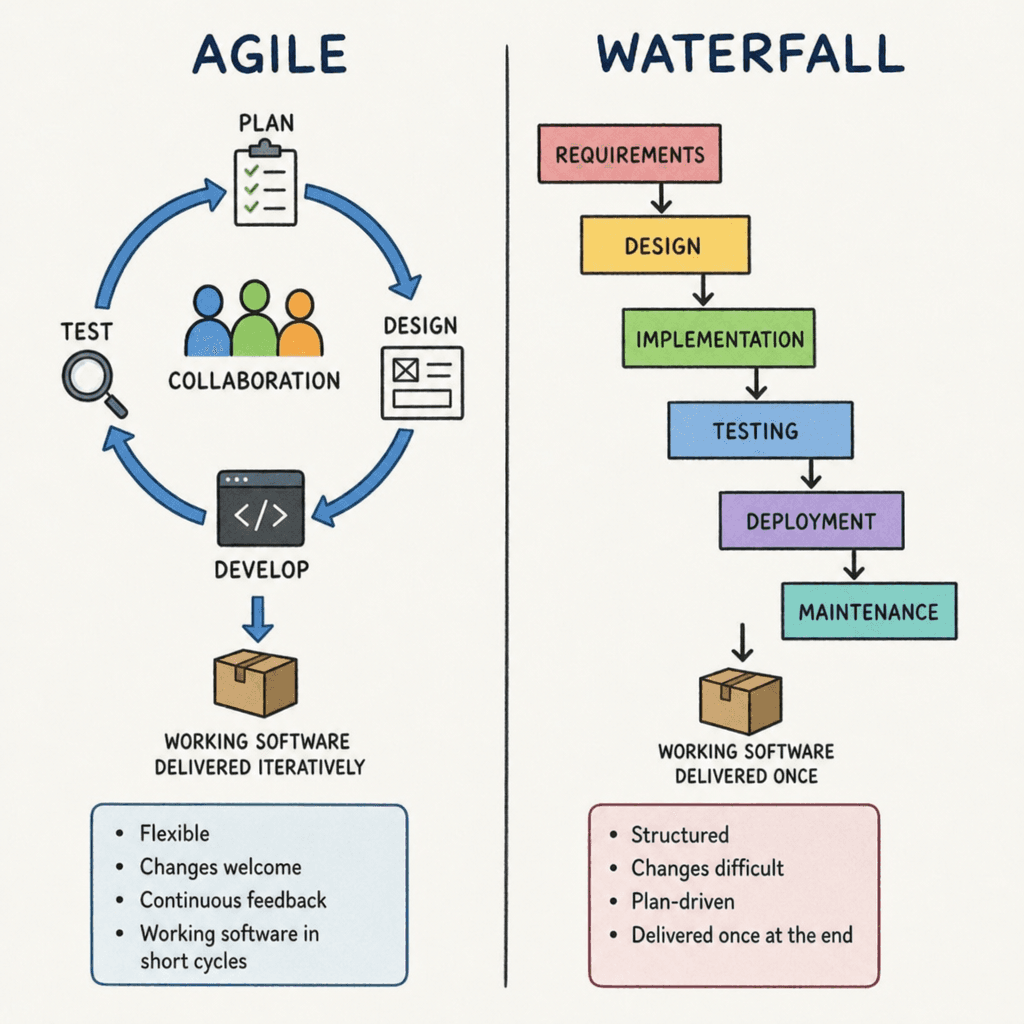
Different agencies build software in different ways.
You want a method that matches the risk your business can take. The two main models are waterfall and Agile. These methods are tools, not goals. The goal is to deliver a product on time.
Agile works in small batches. It helps when you expect change and want feedback from users.
Waterfall works in planned phases. It fits projects where the scope is clear and the timeline matters a lot.
In real projects, most teams use a mix of both. Agile was never meant to be rigid. It was meant to support better process over time.
When you assess agencies, make sure their approach matches your goals and risk profile. Big changes in the middle of a project often cause delays. Ask for fixed milestones so you can track progress and reach the outcome you want.
If time matters most, choose a team that works more like waterfall and can deliver to a set schedule.
Understanding Support and Maintenance
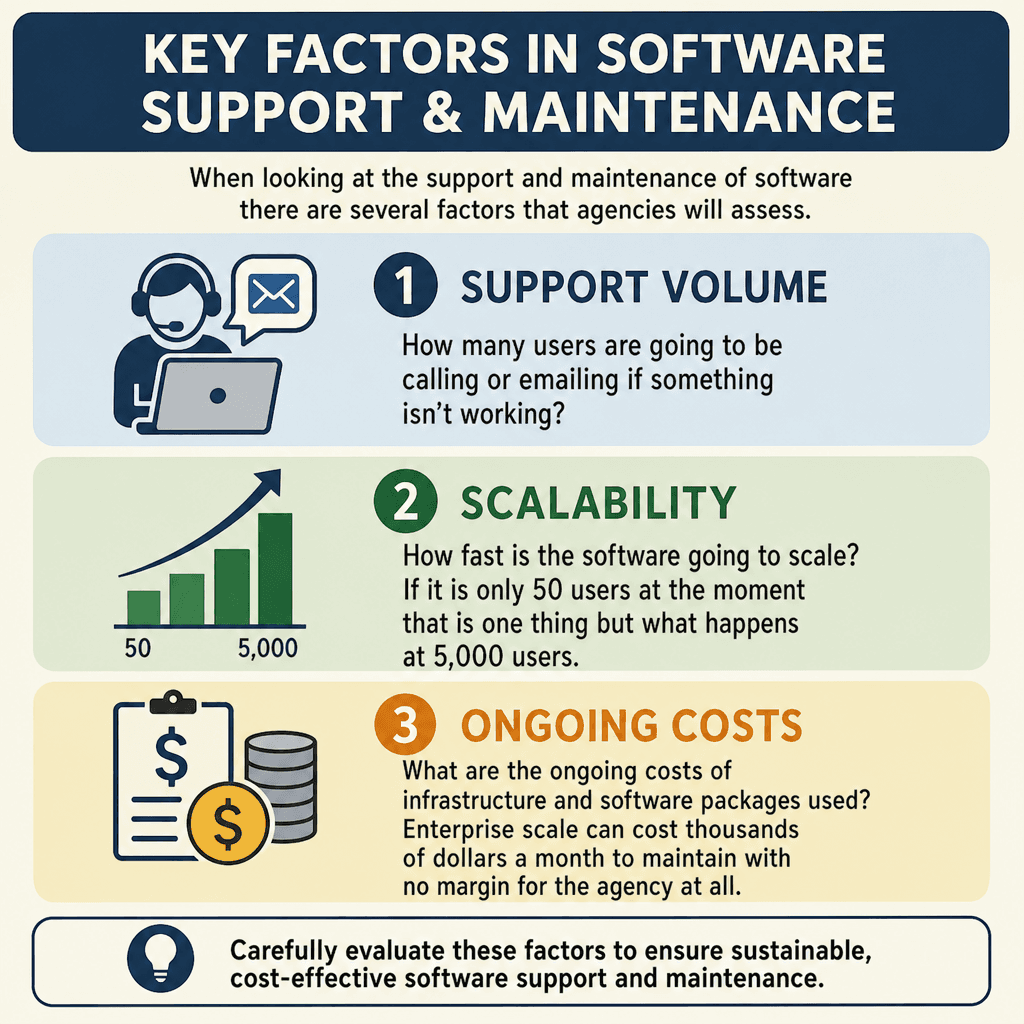
Support and maintenance matter after launch.
Ask these questions:
- How many users will contact support if something breaks?
- How fast will the software grow?
- What are the ongoing costs for hosting and tools?
- What happens when the user base grows from 50 to 5,000?
Enterprise systems can cost a lot to run each month. If you ask about this early, you can avoid surprise costs later.
Conclusion
A good custom application development company shows clear outcomes, trust, and real experience. The app should support the business goal. The best starting point is an agency that understands that.
Recap of Key Points
- Good planning, delivery, and support are hard. Choose a team with real experience.
- Match the delivery method to your risk profile.
- Support should match your growth and service needs.
Final Recommendations
Look for actions that point to a real outcome, even in the first meeting. Did they ask you to come prepared? Did they give you practical steps that raise your chance of success? Did they explain your idea clearly? Did they talk about the commercial value of your idea?
Q&A
Question: What should I look for in a custom application development company?
Short answer: Look for real experience, clear planning, strong quality checks, smart technology choices, and a team that understands the outcome you want. The right company should help with risk, growth, support, testing, compliance, and commercial value.
Question: Why is planning so important before starting custom application development?
Short answer: Planning defines the problem, the result you want, the users you must support, and the cost of building and running the product. Without that plan, the work can slow down, cost more, and miss the business goal.
Question: Should I choose Agile or waterfall development for my project?
Short answer: It depends on your risk profile and how clear your requirements are. Agile works well when you expect feedback and change. Waterfall works well when the scope is fixed and timing matters. Many agencies use both.
Question: How important is testing in custom application development?
Short answer: Testing is essential. It confirms that the app does what it should do. Manual and automated tests reduce failure risk, improve reliability, and prevent live demo problems.
Question: What ongoing costs should I consider after the application is built?
Short answer: Think about hosting, software packages, support, maintenance, user growth, and scaling needs. A system that works for 50 users may need a different setup at 5,000 users, so discuss expectations early.